
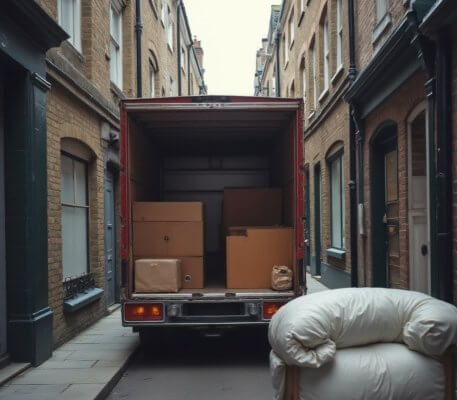
Moving house in London often looks simple on paper — pack your things, load a van, and head to the new place. In reality, it rarely works like that. The way properties are built, combined with busy streets and restricted access, means small mistakes can quickly turn into delays.
This guide focuses on the most common things people get wrong when moving in London, and how to handle them properly based on real removals experience.
Underestimating How Much Stuff They Have
One of the first issues people run into is volume. What seems like “just a few boxes” usually turns into far more once packing starts.
In many London flats, storage is limited, so items get spread across wardrobes, cupboards, and under-bed spaces. When everything is brought out, the total volume becomes much clearer.
A typical one-bedroom flat can easily fill:
- 15 to 25 boxes
- Several large furniture pieces
- Additional loose or fragile items
Leaving this unplanned often leads to last-minute packing or running out of materials.
Leaving Packing Until the Last Minute
Packing always takes longer than expected.
Many people assume they can do it in a day or two, but once you factor in wrapping fragile items, organising boxes, and dismantling furniture, it quickly becomes time-consuming.
In London, where moving days are often tightly scheduled, unfinished packing can delay the entire process.
Using proper materials such as strong boxes, bubble wrap, and furniture covers makes packing more efficient and reduces the risk of damage during transport.
Ignoring Access Issues
This is one of the biggest mistakes during any London move.
Properties in areas like Seven Sisters often come with:
- Narrow staircases
- No lift access
- Shared building entrances
- Limited space for manoeuvring furniture
People tend to focus on distance between properties, but access has a much bigger impact on how long a move takes.
For example, moving from a second-floor flat with no lift can double the time compared to a ground-floor property.
Not Planning Parking in Advance
Parking is often overlooked until the day of the move.
In many London streets, especially residential zones, parking is restricted or requires permits. Without a suitable place for the van, loading becomes more difficult and time-consuming.
We often see situations where:
- The van has to park far from the property
- Items need to be carried longer distances
- Loading takes significantly more time
Arranging parking in advance helps keep the move running smoothly.
Assuming Everything Will Fit Through the Door
Large furniture can be tricky in London properties.
Beds, wardrobes, and sofas don’t always fit through narrow doorways or staircases, particularly in older buildings or converted flats.
This is where dismantling becomes necessary.
Taking furniture apart before moving avoids damage to both the item and the property. Reassembly can then be done at the new location, depending on space and layout.
Not Allowing Enough Time
Time is often underestimated.
Even short-distance moves within London can take several hours due to traffic, access, and loading conditions.
As a general guide:
- Small flat: around 3–4 hours
- Medium property: 4–6 hours
- Larger homes: most of the day
Rushing the process increases the risk of mistakes, so it’s better to plan for realistic timeframes.
Poor Organisation on Moving Day
Without a clear plan, moving day can feel disorganised.
Common issues include:
- Boxes not labelled
- Items packed in the wrong order
- Important belongings misplaced
This slows down both loading and unloading.
A simple system, such as labelling boxes by room, makes a big difference. It helps ensure items are placed correctly at the new property, making unpacking easier.
Forgetting About Fragile Items
Fragile items need more attention than standard packing.
Glassware, electronics, and decorative items are more likely to be damaged if not protected properly.
Using bubble wrap, padding, and secure boxing reduces the risk. It’s also important to keep these items separate from heavier objects during loading.
In many cases, damage happens not during transport, but during handling.
Not Thinking About the New Property
Most people focus entirely on leaving their current home and don’t think ahead to the new one.
But factors like:
- Access at the new address
- Parking availability
- Room layout
all affect how smoothly the move finishes.
Planning ahead ensures items can be unloaded and placed efficiently without confusion.
Expecting Everything to Go Perfectly
No move is completely perfect.
There are always variables, especially in London:
- Traffic delays
- Parking challenges
- Building access issues
The key is not perfection, but preparation.
A well-planned move can adapt to these challenges without causing major disruption.
The Practical Approach to Moving
What makes a move successful isn’t speed — it’s organisation.
From packing properly to understanding access and allowing enough time, each step plays a role in keeping the process under control.
Professional removals services are built around these realities. The focus is not just on transporting items, but on handling them in a way that fits London’s environment.
Final Thoughts
Moving house in London comes with its own set of challenges, and most of them are predictable.
By understanding what typically goes wrong, you can avoid unnecessary stress and keep the process manageable.
Strong Move supports moves across London and the M25 with a practical approach based on real experience — handling access issues, protecting belongings, and keeping everything organised from start to finish.
If you plan ahead and stay realistic about the process, moving doesn’t have to feel overwhelming — even in a busy city like London.

Our Removals London service includes loading, transport, and unloading of furniture, boxes, and household items.
Most Removals London jobs take between 3–6 hours depending on size and access.
Yes, Removals London often involves stair-only properties, and we handle this regularly.
Yes, our Removals London service can include boxes, wrapping, and packing support.


